

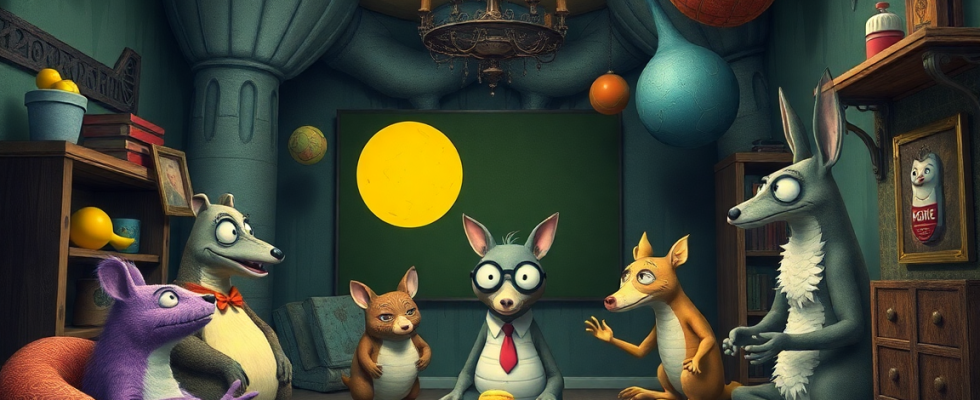
In recent years, television has witnessed a fascinating evolution, marked by the rise of surrealist narratives that captivate audiences with their bizarre and dreamlike qualities. These "weird stories" have become a staple in modern entertainment, drawing viewers into worlds where the boundaries of reality are delightfully blurred. But what is it about surrealist TV that resonates so deeply with audiences, particularly in the United States? This article explores the roots of surrealism, its impact on contemporary television, and why these unconventional stories continue to captivate the public's imagination.
Advertisements
The Roots of Surrealism
Surrealism began as an art and cultural movement in Europe after World War I, championed by figures like André Breton. The movement sought to liberate the human mind by tapping into the unconscious, often resulting in artworks that defied rationality and embraced the bizarre. As described by sources like The Art Story, surrealists aimed to "unlock the power of the imagination" by channeling dreams and subconscious thoughts, rejecting the constraints of literary realism and rationalism.
This philosophy resonated beyond visual arts, influencing literature, theater, and eventually, film and television. Surrealism's appeal lies in its ability to transcend ordinary life, offering an exploration of the mind's untamed realms. The movement's emphasis on imagination and the unconscious aligns perfectly with the narrative possibilities of television, where visual and auditory elements can be manipulated to create truly surreal experiences.
Surrealism in Contemporary Television
The influence of surrealism on modern television is undeniable, with shows like "Twin Peaks," "Lost," and "Severance" leading the charge. These series employ surrealist elements to craft stories that are both puzzling and mesmerizing. For instance, "Twin Peaks," created by David Lynch, is renowned for its dreamlike sequences and enigmatic storyline, inviting viewers to delve into a surreal world where the line between reality and fantasy is intentionally blurred.
Similarly, "Lost" captivated audiences with its intricate plot and supernatural elements, often leaving viewers questioning the nature of reality itself. The show's ability to intertwine surrealist themes with suspenseful storytelling set a new standard for what television narratives could achieve.
"Severance," another noteworthy example, uses surrealism to explore the psychological consequences of work-life balance. The series portrays a dystopian world where employees can separate their personal and professional lives through a surgical procedure, leading to bizarre and unsettling scenarios that challenge viewers' perceptions of identity and consciousness.
The Appeal of Weird Stories
Why do audiences gravitate towards these surrealist narratives? One reason is the sheer novelty and unpredictability that such stories offer. In an era where many television shows follow formulaic patterns, surrealist TV stands out by breaking conventions and defying expectations. Viewers are drawn to the unusual and unexpected, finding excitement in stories that refuse to adhere to the norm.
Moreover, surrealist television often provides a form of escapism. In a world where reality can be mundane or overwhelming, these weird stories offer a retreat into the fantastical. They allow viewers to temporarily suspend disbelief and immerse themselves in alternate dimensions where anything is possible. This form of escapism is particularly appealing in the United States, where the fast-paced nature of life often leaves individuals seeking refuge in the imaginative.
Additionally, surrealist TV encourages introspection and critical thinking. By presenting narratives that challenge conventional logic, these shows invite audiences to question their own perceptions and beliefs. They provoke thought and discussion, fostering a deeper engagement with the material. The complexity and ambiguity of surrealist stories offer endless interpretive possibilities, allowing viewers to derive personal meaning from the content.
The Cultural Impact of Surrealist TV
The rise of surrealist TV has not only influenced storytelling but also shaped cultural conversations. Shows like "Twin Peaks" and "Lost" have become cultural touchstones, inspiring fan theories, academic analyses, and even influencing fashion and music. The distinct visual and narrative style of surrealist television has permeated other forms of media, from advertising to video games, highlighting its profound impact on popular culture.
Furthermore, surrealist TV has contributed to a broader acceptance of unconventional narratives in mainstream media. It has paved the way for more diverse storytelling, encouraging creators to experiment with form and content. This shift reflects a growing appreciation for narratives that challenge norms and push creative boundaries, ultimately enriching the television landscape.
Conclusion
The rise of surrealist TV marks an exciting chapter in the evolution of storytelling. These weird stories captivate audiences by offering a unique blend of imagination, unpredictability, and introspection. As viewers continue to seek narratives that challenge the ordinary and embrace the extraordinary, surrealist television will likely remain a vital and influential force in the entertainment industry.
In a world where reality often feels constrained, the allure of surrealist TV lies in its ability to transport us to realms where the impossible becomes possible. By tapping into the power of the unconscious and embracing the bizarre, these stories remind us of the boundless potential of imagination. As the landscape of television continues to evolve, the enduring appeal of surrealist narratives is a testament to their profound impact on both creators and audiences alike.