

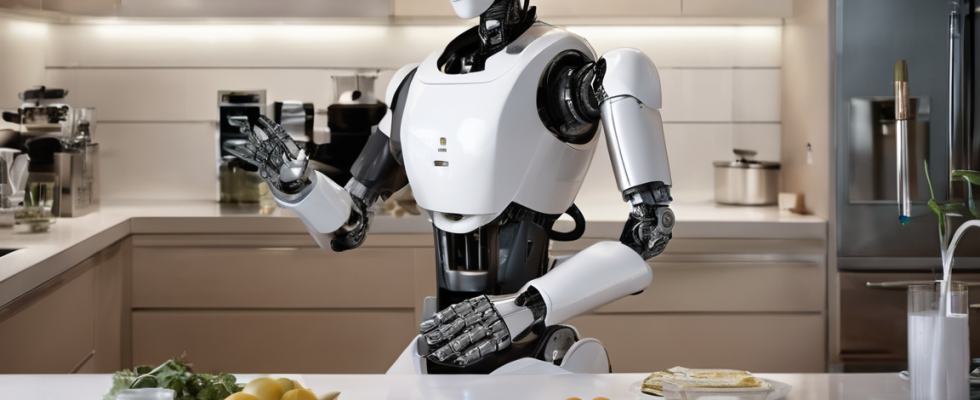
In recent years, the landscape of robotics has seen significant advancements, particularly in the development of humanoid robots. These machines, designed to mimic human behavior and appearance, are gradually making their way into various aspects of daily life. One of the most intriguing prospects is their potential role in performing household chores. As technology continues to evolve, the question arises: Are humanoid robots ready to assist with household tasks?
Advertisements
The Current State of Humanoid Robots
Humanoid robots are engineered to execute functions that require a degree of human-like interaction. With advancements in artificial intelligence (AI) and robotics, these robots are increasingly capable of performing tasks that were once deemed too complex for machines. Standing at approximately 168 centimeters and weighing around 30 kilograms, models like the Neo bot are designed to automate common household chores. Priced at around $20,000, these robots promise the automation of tasks such as cleaning, organizing, and even preparing simple meals.
Despite these advancements, the reality is that many humanoid robots are still far from being fully autonomous. According to experts, they are often tele-operated by humans, meaning they require human input to function effectively. This limitation poses significant challenges for mass deployment within homes, where seamless operation is essential for practicality.
Technological Challenges and Limitations
While the concept of a robot handling household chores is appealing, several technological hurdles hinder their widespread adoption. One primary challenge is the complexity of human environments. Unlike controlled industrial settings, homes are dynamic spaces with varying layouts and obstacles. This requires robots to possess advanced navigation and adaptability capabilities, which are still under development.
Another crucial aspect is the robots' ability to interact with different household items. Tasks like loading a dishwasher or folding laundry require fine motor skills and a level of dexterity that current humanoid robots are only beginning to achieve. Additionally, the integration of tangible AI, which allows robots to perform tasks with human-like precision, is still in its nascent stages.
Progress and Potential
Despite these challenges, progress is being made. Companies are investing heavily in research and development to address these limitations. For instance, innovations in machine learning and AI are enabling robots to learn from their environments and improve their performance over time. This capability is crucial for tasks that involve repetitive actions, such as cleaning or tidying up.
Furthermore, the development of specialized robots for single-purpose tasks has already seen success. Devices that clean dishes, vacuum floors, or even feed pets have become commonplace in many households. These single-purpose robots demonstrate the potential of robotics technology in easing daily chores, paving the way for more sophisticated humanoid counterparts.
The Economic and Social Impacts
The integration of humanoid robots into households presents both economic and social implications. Economically, the high cost of these robots remains a significant barrier to entry for the average consumer. However, as technology advances and production costs decrease, these robots could become more affordable and accessible.
Socially, the introduction of robots into domestic settings raises questions about employment and human-robot interaction. While robots can alleviate mundane tasks, there is concern about the potential displacement of household workers. Moreover, the societal acceptance of robots sharing domestic spaces with humans is still under discussion. The relationship between humans and robots in a home setting must be carefully navigated to ensure coexistence is beneficial.
Future Prospects
Looking ahead, experts predict that humanoid robots could be ready to perform household chores by 2026. This timeline suggests that significant advancements in AI, robotics, and machine learning are on the horizon. As these technologies mature, robots will likely become more efficient, reliable, and capable of handling a broader range of tasks.
The potential for humanoid robots to revolutionize household chores is immense. By taking on repetitive and time-consuming tasks, these robots could free up valuable time for individuals, allowing them to focus on activities that require human creativity and emotional intelligence.
Conclusion
In conclusion, while humanoid robots are not yet fully ready to take over household chores, the progress being made is promising. The current generation of robots, although limited, showcases the potential for future advancements. As technology continues to evolve and address the challenges of navigation, dexterity, and human-like interaction, the dream of having robots seamlessly integrate into everyday life becomes more attainable.
The rise of humanoid robots in homes will depend on continued innovation and societal acceptance. As we move closer to a future where robots assist with household tasks, it is essential to balance technological advancements with ethical considerations and practical needs. Ultimately, the successful integration of humanoid robots into domestic life could transform the way we live, work, and interact with technology.
With ongoing research and development, humanoid robots may soon become indispensable household companions, ready to tackle the chores that occupy our time and energy. As we stand on the brink of this technological revolution, the possibilities for enhancing our quality of life are boundless.