

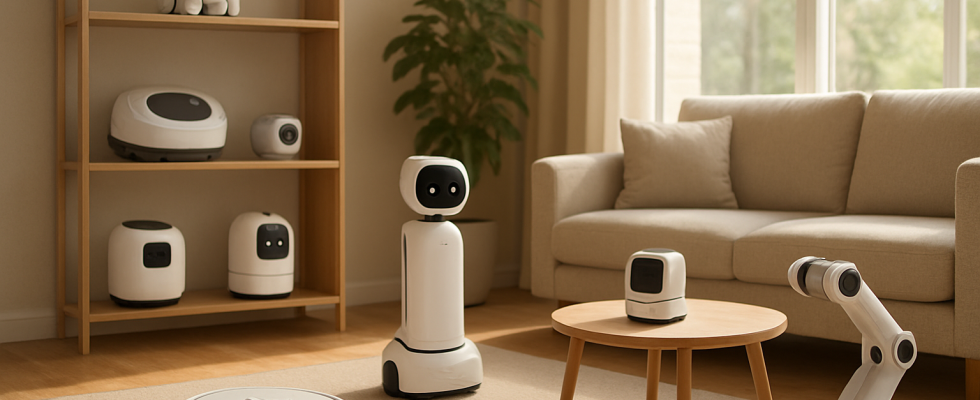
In recent years, the concept of home robots has transitioned from science fiction to reality. The market for consumer robotics is expanding, bringing advanced technologies into our homes. These first-generation home robots are designed to perform a variety of tasks, promising convenience and efficiency for everyday living. However, they come with their own set of limitations. This article explores the capabilities and restrictions of the first home robots available for purchase, shedding light on what they currently offer and what they still lack.
Advertisements
The Rise of Home Robots
The emergence of home robots represents a significant technological breakthrough. Driven by advancements in artificial intelligence, machine learning, and robotics engineering, these machines are designed to assist with domestic chores and enhance our quality of life. The United States, in particular, is seeing a proliferation of these robots due to high demand for smart home technology.
Popular Home Robots
Several home robots are now available on the market, each serving different purposes:
Robot Vacuums: Perhaps the most popular and widely adopted type of home robot, robotic vacuums like the Roomba by iRobot have become household names. These devices autonomously clean floors, navigating around obstacles and returning to their charging stations when needed.
Robot Mowers: Similar to robotic vacuums, robot mowers like the Husqvarna Automower tackle the task of lawn maintenance. They operate within defined boundaries to ensure your lawn is consistently trimmed.
Personal Assistants: Robots such as the Amazon Astro and the Temi are designed to serve as personal assistants. They can perform tasks like setting reminders, playing music, and even providing video communication capabilities.
Companion Robots: Products like the Jibo and Aibo are designed to provide companionship, offering interactive experiences that can be particularly beneficial for the elderly or children.
What Home Robots Can Do
Home robots today offer a range of functionalities that simplify daily tasks:
Cleaning and Maintenance
The most common application for home robots is in cleaning and maintenance. Robot vacuums and mowers autonomously handle these repetitive tasks, saving time and effort for homeowners. They use sensors and algorithms to navigate spaces efficiently, avoiding obstacles and adapting to different surfaces.
Personal Assistance
Personal assistant robots are equipped with voice recognition and AI capabilities, allowing them to perform a variety of tasks. They can control smart home devices, answer questions, provide weather updates, and even play music or videos on command.
Security and Monitoring
Some advanced home robots offer security features, including video monitoring and alert systems. These robots can patrol homes, monitor unusual activities, and provide real-time alerts to homeowners via mobile applications.
Social Interaction
Companion robots are designed to interact socially with users. They can recognize faces, respond to verbal commands, and offer emotional support. These features make them ideal companions for individuals living alone or in need of social interaction.
Limitations of Current Home Robots
Despite their remarkable capabilities, current home robots have limitations:
Limited Task Range
While they can perform specific tasks effectively, home robots are not yet capable of handling a wide range of household chores. Their functionalities are often limited to the tasks they were specifically designed for, such as vacuuming or mowing.
Dependency on Environment
Home robots rely heavily on the home environment for optimal functioning. They require specific conditions, such as obstacle-free pathways and proper lighting, to operate effectively. This dependency can limit their performance in cluttered or poorly lit spaces.
High Costs
The cost of acquiring and maintaining home robots can be prohibitive for some consumers. While prices have decreased over time, advanced models with more features can still be expensive, making them a luxury for many households.
Privacy Concerns
As these robots are equipped with cameras and microphones, privacy concerns are a significant issue. Consumers must be aware of data collection practices and ensure that their privacy is protected, especially with robots that have internet connectivity.
The Future of Home Robotics
The future of home robotics is promising, with ongoing research and development aiming to address current limitations. Innovations in AI and machine learning are expected to enhance the autonomy and versatility of home robots, enabling them to perform a broader range of tasks.
Enhanced AI Capabilities
Future home robots will likely feature more advanced AI, allowing for better decision-making and adaptability. This could enable them to learn new tasks and improve their performance over time.
Improved Affordability
As technology advances, the cost of producing home robots is expected to decrease. This reduction in cost will make these robots more accessible to a wider audience, increasing their adoption in households across the United States.
Greater Integration with Smart Homes
The integration of home robots with smart home systems will enhance their functionality. Seamless communication between robots and other smart devices will enable more efficient management of household tasks.
Conclusion
Home robots represent a fascinating intersection of technology and daily life, offering convenience and efficiency. While they are not yet a complete replacement for human labor, their capabilities continue to expand. As technology evolves, home robots will likely become an integral part of our daily routines, transforming the way we live and work. For now, these machines provide valuable assistance with specific tasks, and their presence in the home is a testament to the ever-growing potential of robotics innovation.