

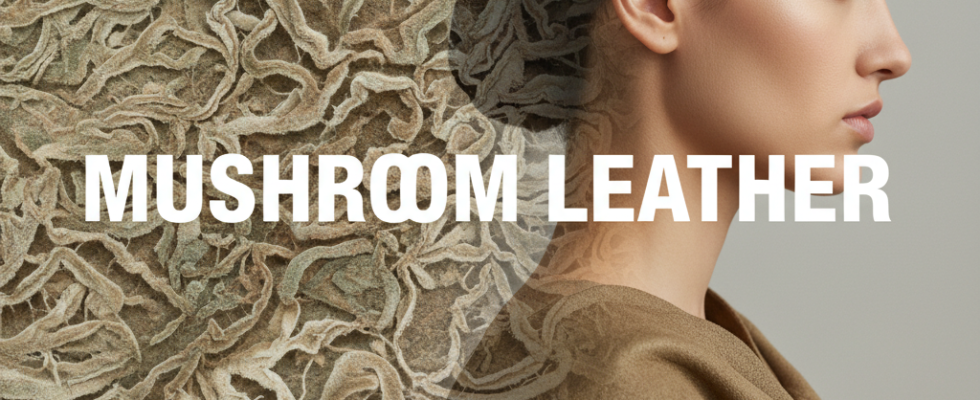
The first time someone told me that the handbag I was admiring was made from mushrooms, I assumed they were joking. It looked like buttery Italian leather. It felt supple and warm in the way only premium materials do. But there it was, grown in a lab from mycelium, the root structure of fungi, and it was sitting on a runway next to pieces that cost more than most people’s monthly rent.
Advertisements
Mushroom leather has graduated from curious experiment to genuine contender in luxury fashion. The material, technically called mycelium leather or mylo, is created by growing fungal networks on agricultural waste. The process takes days rather than the years required to raise cattle. It uses a fraction of the water and produces negligible carbon compared to traditional leather production.
What makes this different from previous “eco-alternatives” that looked and felt like compromises is the quality. Early vegan leathers were essentially plastic. They cracked, peeled, and fooled nobody. Mycelium-based materials have a fundamentally different character. They breathe. They develop patina with age. They have the irregularities and warmth that make natural materials feel alive under your fingers.
Major luxury houses are committing seriously. We are not talking about capsule collections or limited-edition stunts. Full product lines, bags, shoes, jackets, and accessories are entering permanent collections made entirely from mycelium. When houses that have built their identity on the finest animal hides start shifting to fungi, the signal is impossible to ignore.
The technology is scaling rapidly. What was once a painstaking laboratory process is now moving into commercial production facilities that can produce sheets of material at volumes relevant to fashion industry demand. Cost parity with premium animal leather is approaching, and once it arrives, the only argument against adoption disappears.
There is something poetic about it, honestly. Fashion has always been about transformation, about taking raw materials and elevating them into something that makes people feel extraordinary. That the raw material is now literally grown from decomposition, from the organisms that break the world down and rebuild it, feels fitting for an industry in the middle of reinventing itself.
The future of luxury might smell like earth after rain. And that is far more exciting than another dead cow.