

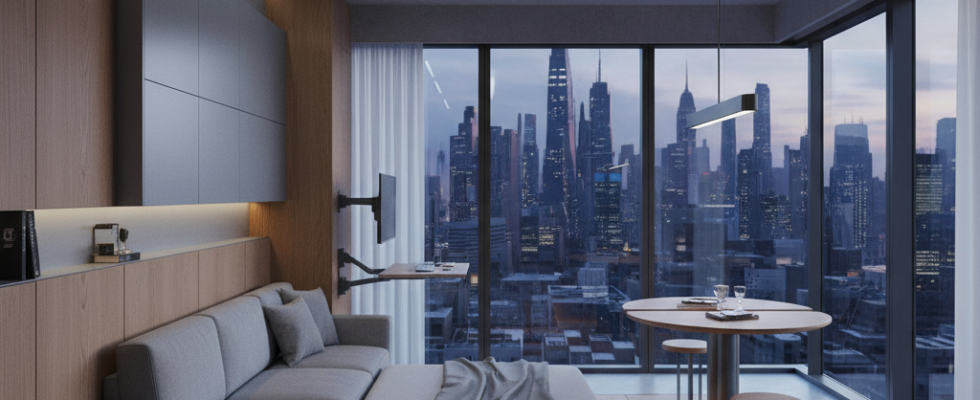
Twenty square meters sounds like a closet until you see what the right designer can do with it. I visited an apartment in Tokyo last spring that contained a kitchen, dining area, workspace, sleeping loft, and a bathroom that somehow felt spacious. The total footprint was smaller than most people’s living rooms. It worked because every centimeter had been considered with the intensity of a chess player thinking twelve moves ahead.
Advertisements
Micro-living is not about deprivation. That is the misconception that makes people dismiss it. It is about intentionality. When space is limited, every object earns its presence. Every piece of furniture justifies itself through multiple functions. The result is not cramped. It is edited. There is a difference between having less space and having less clutter, and micro-living forces you to achieve both simultaneously.
The furniture revolution is what makes this livable rather than merely survivable. Beds that lift to reveal desks. Tables that fold from walls. Sofas with storage integrated so seamlessly that guests never notice. These are not the flimsy space-saving furniture of college dormitories. They are engineered systems with hydraulic assists, precision hinges, and materials that belong in luxury interiors.
Vertical space is the most underutilized dimension in small apartments. Walls that hold nothing are wasted square footage turned sideways. Magnetic knife strips, floating shelves at varying heights, ceiling-mounted storage, and lofted sleeping areas all exploit the volume that exists above eye level. Thinking vertically effectively doubles your usable space.
Light does more work than square footage when it comes to perceived spaciousness. A twenty-meter apartment with one small window feels like a cell. The same space with a large window, light-colored surfaces, and strategic mirrors feels open and livable. Investing in window treatments that maximize natural light penetration is worth more than almost any furniture purchase in a small space.
The psychological shift matters most. People who thrive in micro-spaces describe a clarity that larger homes do not provide. When you cannot accumulate, you curate. When everything is visible, everything stays organized. The discipline that small-space living requires becomes a form of mental hygiene that extends beyond the physical environment.
You do not need a mansion to live well. You need intention, good design, and the willingness to decide what actually matters to you. Twenty square meters is plenty of room for a beautiful life. It just leaves no room for things that do not serve it.