

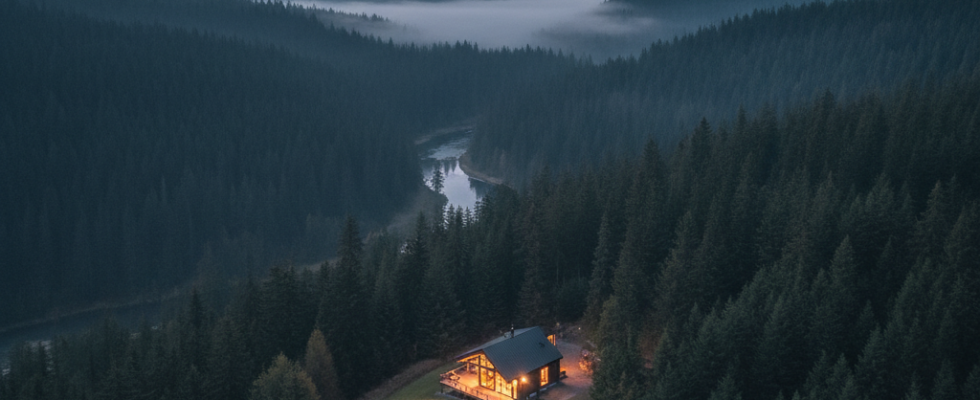
The cabin had no wifi. Not because it was rustic or underfunded, but because the absence of connectivity was the product being sold. At nine hundred dollars a night, silence was the luxury amenity. No notifications. No calls. No ability to check whether the world was still functioning without you. The answer, it turns out, is yes. The world does fine. The relief of knowing that is worth every penny.
Advertisements
Isolation tourism has emerged as a legitimate sector of luxury travel, catering to people who have everything except the one thing their lives lack: genuine quiet. Not the quiet of a spa where whispered conversations drift between treatment rooms. The quiet of absolute solitude, where the loudest sound is your own breathing and the second loudest is wind through trees.
The destinations range from Nordic glass cabins in forests so remote that the nearest human is kilometers away, to desert retreats where the landscape is so vast and empty that perspective itself dissolves. Mountain huts accessible only by helicopter. Islands with populations of zero. The point is distance from other humans and the noise, both literal and digital, that they generate.
What draws high-performing professionals to these experiences is not rest in the conventional sense. Many report that their minds become remarkably active in isolation. Without input, the brain begins processing the accumulated stress, ideas, and unresolved thoughts that daily stimulation prevents it from addressing. The experience is less like vacation and more like defragmentation.
The properties themselves are not austere. Luxury isolation means heated floors, floor-to-ceiling windows, exceptional bedding, and kitchens stocked by chefs who will never see you eat what they prepared. The physical comfort creates a container for psychological exploration. You are not roughing it. You are removing everything unnecessary while keeping everything that nurtures.
Most guests report a consistent pattern. The first twelve hours are uncomfortable. The urge to check a phone that cannot connect is almost physical. Then something releases. By day two, the rhythm of nature replaces the rhythm of notifications. Sleep deepens. Thoughts slow and clarify. By day three, the prospect of returning to connectivity feels vaguely threatening.
We live in the noisiest era in human history and we are building silence into a product because we can no longer find it for free. That is slightly tragic. But the demand reveals a need that most people do not recognize until they experience its fulfillment. Silence is not emptiness. It is the space where you finally hear yourself.