

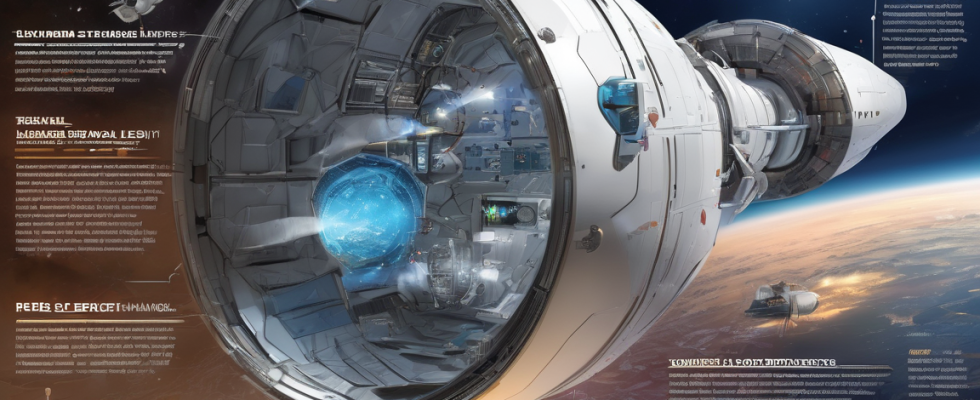
Space tourism, once a concept limited to the realms of science fiction, is rapidly becoming a tangible reality for the masses. This burgeoning industry, poised to revolutionize the way we perceive travel, is underpinned by a myriad of technological advancements. As we stand on the cusp of a new era of exploration, it is essential to understand the technologies that are making space tourism not only possible but increasingly accessible. This article explores the key technological innovations driving space tourism into the mainstream, focusing on developments in propulsion systems, spacecraft reusability, and safety measures.
Advertisements
The Evolution of Space Tourism
Types of Space Tourism
Space tourism encompasses various forms, including orbital, suborbital, and lunar travel. Orbital tourism involves traveling to the Earth's orbit, often visiting space stations, whereas suborbital trips take passengers just beyond the Kármán line—the boundary of space—before returning to Earth. Lunar tourism, although still in its nascent stages, aims to offer trips around or even to the moon. Each type presents unique technological challenges and opportunities.
Cutting-Edge Propulsion Systems
Advances in Launch and In-Space Propulsion
The backbone of space tourism lies in advanced propulsion systems, which have seen significant innovations in recent years. NASA and private companies are pioneering technologies that make launches more efficient and cost-effective. These include improvements in cryogenic fluid management and thermal management, crucial for maintaining the integrity of engines and fuel systems in the harsh conditions of space.
Revolutionary propulsion technologies are being developed to reduce the environmental impact and cost of launches. For instance, SpaceX's Raptor engines, powered by methane and liquid oxygen, offer a cleaner alternative to traditional rocket fuels. These engines are designed for reusability, significantly lowering the cost per launch and making frequent space travel a feasible prospect.
Reusability: A Game Changer
One of the most significant technological breakthroughs in space tourism is the development of reusable rockets. Companies like SpaceX and Blue Origin have demonstrated the viability of reusing launch vehicles, drastically reducing costs associated with space travel. The Falcon 9 rocket, for instance, has been launched and recovered multiple times, illustrating the potential for sustainable and economical space travel.
Reusability extends beyond rockets to include spacecraft. The development of vehicles like SpaceX's Starship, designed for repeated use and capable of carrying numerous passengers, represents a pivotal step towards making space tourism more accessible to the general public.
Ensuring Safety and Reliability
Navigation and Landing Systems
Safety is paramount in space tourism, and technological advancements in navigation and landing systems play a critical role in ensuring passenger security. Cutting-edge GPS and autonomous landing technologies enable precise control over spacecraft trajectories, reducing the risk of accidents during launch and re-entry.
Additionally, advanced simulation and training programs for astronauts and space tourists are being developed to prepare them for the unique challenges of space travel. These programs simulate zero-gravity environments and emergency scenarios, ensuring that both crew and passengers are equipped to handle unforeseen situations.
Thermal Management and Life Support
Thermal management is another crucial aspect of space travel, as spacecraft must withstand extreme temperatures during launch, orbit, and re-entry. Innovations in thermal protection systems are essential to safeguard both the vehicle and its occupants. These systems, often composed of heat-resistant tiles and coatings, are designed to dissipate heat effectively, ensuring the structural integrity of the spacecraft.
Life support systems are equally vital, providing essential resources such as oxygen, water, and temperature control. Advances in closed-loop life support systems, which recycle air and water, are critical for longer-duration trips, such as those planned for lunar tourism.
The Role of Private Industry
Streamlined Manufacturing Processes
The involvement of private companies has been instrumental in accelerating the development of space tourism technologies. Organizations like AST and SpaceX have embraced streamlined manufacturing processes, allowing for rapid production and testing of spacecraft components. This agility not only expedites technological advancements but also reduces costs, making space tourism more economically viable.
Furthermore, private industry partnerships with governmental space agencies leverage expertise and resources, fostering an environment of innovation and collaboration. This synergy is crucial for overcoming the technical challenges associated with space tourism and achieving the goal of widespread accessibility.
Conclusion
As we look to the future, the dream of space tourism for the masses is becoming increasingly attainable, thanks to remarkable technological advancements. From reusable rockets and advanced propulsion systems to cutting-edge safety measures, the innovations driving this industry are transforming the way we think about travel. While significant challenges remain, the progress made thus far is a testament to human ingenuity and the relentless pursuit of exploration. As technology continues to evolve, space tourism is poised to become an integral part of our lives, offering a new frontier for adventure and discovery. The stars are no longer out of reach; they are the next destination.