

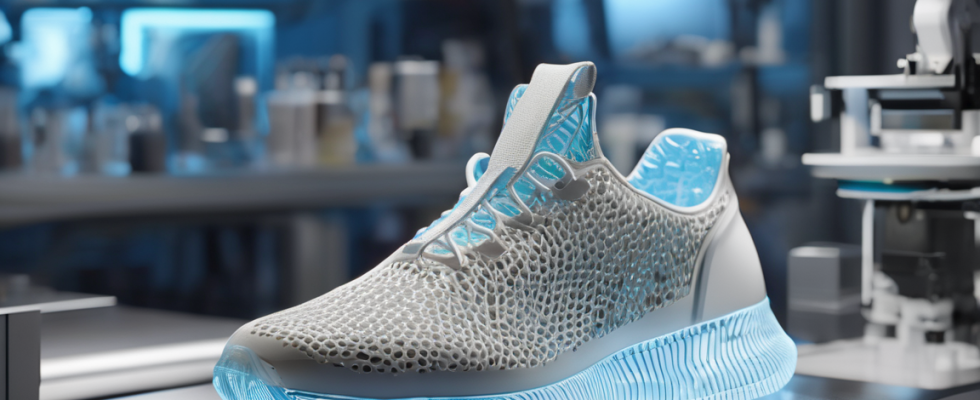
In the rapidly evolving world of fashion and technology, 3D printed footwear is emerging as a transformative innovation poised to redefine how we think about shoes. This cutting-edge approach not only promises enhanced comfort and customization but also represents a significant step towards sustainable and efficient manufacturing processes. Let's delve into the world of 3D printed shoes and explore why they are being hailed as the future of custom-fit sneakers.
Advertisements
The Rise of 3D Printed Footwear
3D printing, also known as additive manufacturing, has been making waves across various industries, from aerospace to healthcare. In recent years, the footwear industry has begun to embrace this technology, recognizing its potential to revolutionize shoe design and production. Companies like Adidas have been at the forefront, introducing models like the 4DFWD, which integrates 3D printed midsoles to enhance performance and comfort. This shoe, and others like it, showcase how 3D printing can create complex geometries that are difficult to achieve using traditional manufacturing methods.
Customization: A Perfect Fit for Everyone
One of the most compelling advantages of 3D printed footwear is the ability to create custom-fit shoes tailored to individual needs. Unlike conventional shoes that are mass-produced in standard sizes, 3D printed sneakers can be designed to match the exact contours of a person's feet. This is achieved through precise scanning and modeling techniques that capture the unique shape and size of each foot. As a result, wearers experience improved comfort and support, reducing the risk of common foot ailments associated with ill-fitting shoes.
According to a report on cnet.com, the individualism brought by 3D printing is a much-needed change in the shoe industry. It allows for mass customization, where each pair of shoes is designed to meet the specific requirements of the wearer. This level of personalization not only enhances comfort but also has the potential to improve athletic performance by providing better support and reducing the risk of injury.
The Manufacturing Revolution
3D printed footwear also represents a significant shift in manufacturing paradigms. Traditional shoe manufacturing involves multiple complex processes, often requiring significant labor and material resources. In contrast, 3D printing streamlines production by creating shoes layer by layer directly from digital models. This not only reduces waste but also allows for on-demand production, minimizing inventory and reducing the environmental impact associated with overproduction.
The use of materials like ThermoPlastic Polyurethane (TPU) and acrylonitrile butadiene styrene (ABS) in 3D printing is further enhancing the durability and flexibility of these shoes. As noted in research published by link.springer.com, multi-material printing techniques allow for the development of personalized cast shoes that offer both comfort and support. This innovation is paving the way for new possibilities in footwear design and function.
Sustainability and Efficiency
Sustainability is a critical concern in today's world, and 3D printing offers a solution to some of the environmental challenges faced by the footwear industry. By reducing material waste and enabling localized production, 3D printing helps decrease the carbon footprint associated with traditional shoe manufacturing. Additionally, the ability to recycle materials used in 3D printing further enhances the sustainability of this approach.
Brands are increasingly recognizing the importance of sustainable practices, and 3D printed footwear aligns perfectly with these goals. For example, companies are exploring the use of biodegradable and recyclable materials in their 3D printed designs, contributing to a more eco-friendly production cycle.
Challenges and Future Prospects
Despite the numerous benefits, 3D printed footwear also faces challenges that need to be addressed for wider adoption. The cost of 3D printing technology remains relatively high, which can be a barrier for small-scale producers and consumers looking for affordable options. Additionally, the speed of production is still limited compared to traditional methods, although advancements in technology are gradually overcoming this hurdle.
Moreover, consumer acceptance and trust in the durability and performance of 3D printed shoes are crucial for market growth. As more brands invest in research and development, and as successful case studies like those from Adidas and other pioneers become more prevalent, consumer confidence is expected to rise.
Looking Ahead
The future of 3D printed footwear looks promising as technology continues to advance and become more accessible. Innovations at industry events like FORMNEXT 2024 underscore the growing interest and investment in 3D printing for footwear applications. As the technology matures, it is likely that we will see even greater diversity in design, material use, and functionality.
The potential for fully personalized, on-demand footwear that combines style, comfort, and sustainability is an exciting prospect. It represents a shift towards a more consumer-centric approach, where shoes are no longer just off-the-shelf products but tailored solutions that cater to individual needs and preferences.
Conclusion
3D printed footwear is poised to be a game-changer in the shoe industry, offering unparalleled customization, sustainability, and manufacturing efficiency. As technology evolves and becomes more cost-effective, it is expected that 3D printed shoes will become increasingly popular among consumers seeking personalized and environmentally friendly options. With companies leading the charge in innovation and production, the future of custom-fit sneakers is not just a possibility but a reality on the horizon. Whether for professional athletes or everyday wearers, 3D printed footwear is set to revolutionize the way we experience shoes, one layer at a time.