

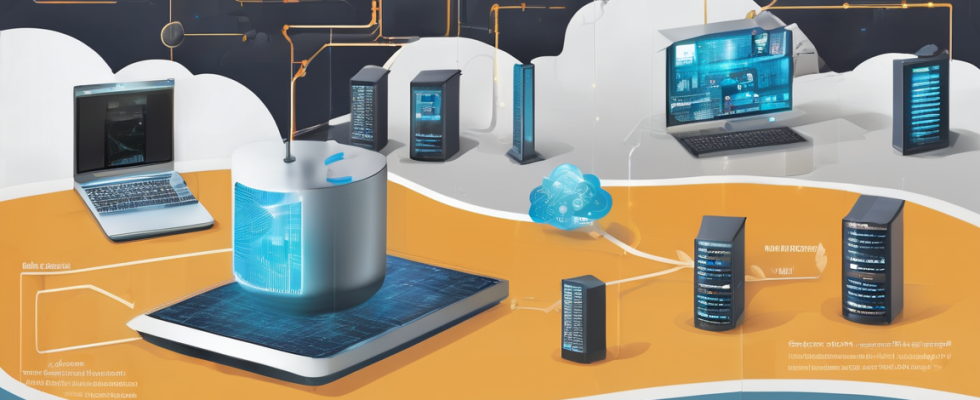
In the ever-evolving realm of technology, the terms "cloud computing" and "edge computing" have become buzzwords, often used interchangeably but fundamentally distinct in their applications and benefits. As the Internet of Things (IoT) continues to expand, understanding the differences between these two paradigms is crucial, especially considering why your next gadget might not need a constant internet connection.
Advertisements
Understanding Cloud Computing
What is Cloud Computing?
Cloud computing refers to the delivery of computing services—servers, storage, databases, networking, software, analytics, and more—over the internet. This model allows users to access and store data on remote servers rather than on a local server or personal computer. This has been the backbone for many applications, from personal photo storage to enterprise-level databases. Whether you're streaming your favorite music, hosting a website, or analyzing large datasets, cloud computing plays a vital role in ensuring these services are accessible and efficient.
Benefits of Cloud Computing
The primary advantage of cloud computing lies in its scalability and efficiency. Businesses can scale their computing resources up or down as needed without investing in expensive physical infrastructure. This flexibility allows companies to adapt quickly to market changes and consumer demands. Moreover, cloud computing offers robust data backup and recovery solutions, making it indispensable for organizations prioritizing data integrity. The redundancy and reliability provided by cloud services ensure that businesses can recover swiftly from unexpected disruptions, maintaining operational continuity.
However, cloud computing heavily relies on a stable internet connection. Tasks that require real-time processing might suffer from latency issues, which is where edge computing enters the scene. For instance, a video conferencing application can experience delays if relying solely on cloud servers, affecting communication quality.
Enter Edge Computing
What is Edge Computing?
Edge computing shifts data processing away from centralized cloud data centers to the "edge" of the network, closer to where data is generated. This means that rather than sending every piece of information to the cloud for processing, data can be processed locally on devices such as sensors, smartphones, or other IoT gadgets. This distributed approach ensures that data can be handled more effectively and efficiently at the source, reducing the need for data to traverse long distances.
Advantages of Edge Computing
One of the most significant advantages of edge computing is its ability to provide faster data processing. By reducing the distance data needs to travel, edge computing can dramatically decrease latency, providing near-instantaneous results. This is particularly beneficial in applications requiring immediate reactions, like autonomous vehicles or automated manufacturing systems. In these scenarios, milliseconds matter, and edge computing provides the speed and responsiveness needed to make critical decisions.
Moreover, edge computing enhances privacy and security by keeping sensitive data closer to its source and reducing the amount of data sent over the internet. It's a boon for industries dealing with sensitive information, where minimizing data exposure is critical. For instance, healthcare devices processing patient data can use edge computing to ensure that private information remains secure and does not leave the local environment unnecessarily.
Edge Computing vs. Cloud Computing
Key Differences
While both cloud and edge computing aim to process and manage data, their methodologies and use cases differ significantly. Cloud computing thrives in scenarios requiring massive computational power, such as data analysis and machine learning tasks that can be queued and processed over time. For example, a retail company might use cloud computing to analyze customer data to forecast trends and optimize inventory. In contrast, edge computing excels in real-time data processing, where speed and efficiency are paramount.
Use Cases
Edge computing is increasingly becoming the go-to solution for IoT applications. Consider smart home devices that need to process data instantaneously to control lighting or heating systems without delay. In smart cities, edge computing enables traffic management systems to adapt quickly to changing conditions, optimizing flow and reducing congestion. In contrast, cloud computing remains crucial for big data analytics, where vast amounts of data are analyzed to extract meaningful insights. An example would be a social media platform analyzing user interactions on a global scale to improve algorithms and user experience.
Why Your Next Gadget Won't Need the Internet
On-Device AI: A Game Changer
A significant development in edge computing is the rise of on-device AI. This technology allows devices to process data and make decisions locally without needing to send information to the cloud. On-device AI is better suited for tasks requiring privacy, speed, and offline functionality. For instance, smartphones equipped with on-device AI can perform complex tasks like voice recognition and photo editing without an internet connection. This capability enhances user experience by providing fast, responsive features that do not rely on external connectivity.
The Future of Connectivity
The push towards edge computing and on-device AI signifies a shift in how we perceive connectivity. We are moving towards a future where devices are increasingly autonomous, capable of performing advanced functions independently. This shift reduces the dependency on constant internet connectivity, which can be a game-changer in areas with limited access to high-speed internet. In remote or rural areas, edge computing can empower devices to function effectively without relying on unreliable or slow internet connections.
Conclusion
Both cloud and edge computing have their unique strengths and applications, but the future is likely to see a harmonious coexistence of both. While cloud computing will continue to play a crucial role in handling large-scale, complex tasks, edge computing will be indispensable for real-time data processing and privacy-centric applications. As technology advances, our gadgets will become smarter and more capable, often not needing the internet to perform their functions efficiently. This evolution promises to redefine our interaction with technology, making it more seamless and responsive to our needs. As edge computing continues to mature, we can expect a future where connectivity is more about capability and less about constant internet access. This transformation will enable a more resilient and adaptable technological landscape, where devices empower users by being smarter and more efficient.