

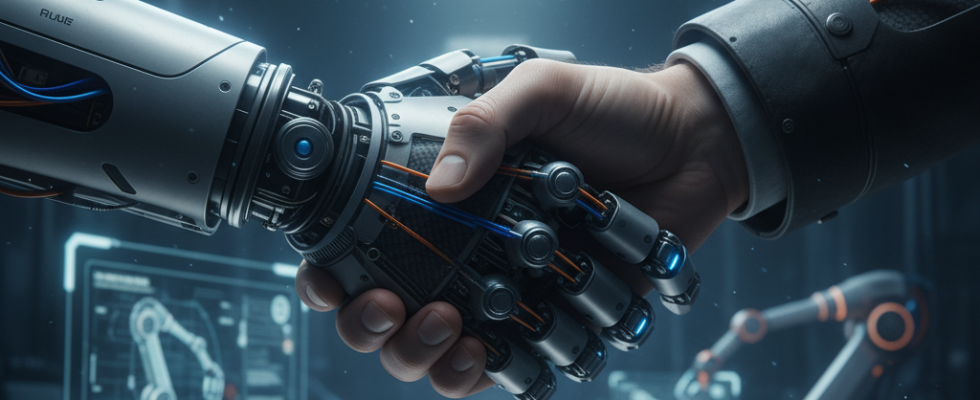
Science fiction writers must be feeling either vindicated or slightly nervous. Technologies that existed only on screen a decade ago are now shipping to consumers, operating in hospitals, or being tested on public roads. The gap between fictional imagination and engineered reality has never been shorter, and this year delivered at least seven examples that crossed from one category to the other.
Advertisements
Real-time language translation earbuds that let two people speaking different languages have a fluid conversation now exist commercially. The latency is under two seconds. The accuracy exceeds ninety percent for major language pairs. Five years ago, this was a scene in a science fiction film. Today, it is a product you can order with standard shipping.
Prosthetic limbs controlled directly by neural signals have moved from laboratory demonstrations to clinical deployment. Users report being able to feel texture, temperature, and pressure through their prosthetics via sensory feedback systems that translate mechanical data into neural signals the brain interprets as touch. The bionic arm is real, and it feels.
Transparent displays that turn ordinary windows into screens are now in production vehicles and architectural installations. Information overlaid on the real world through glass that is clear when inactive and vivid when displaying content. The heads-up display from every futuristic film now comes standard in several car models.
Lab-grown organs have progressed from simple tissues to functional complex structures transplanted into human patients. Bladders, blood vessels, and tracheas grown from patients’ own cells eliminate rejection risk. Kidneys and hearts are in advanced development. The organ shortage crisis has an expiration date that is now measurable in years rather than decades.
Autonomous vehicles operating without safety drivers in geofenced urban areas carry passengers daily in multiple cities. The technology is not hypothetical. It is commercial, regulated, and available through standard ride-hailing apps in qualifying zones. You summon a car with no driver and it takes you where you need to go. Science fiction, delivered.
Space tourism accessible to non-astronaut civilians has moved from individual stunts to scheduled service. Multiple companies offer suborbital and orbital experiences to private citizens. The democratization of space access, long a staple of science fiction worldbuilding, is underway.
Each of these technologies followed a pattern: imagined in fiction, dismissed as fantasy, prototyped in labs, refined through engineering, and finally normalized through commercial availability. The pattern has not changed. Only the speed has. What fiction imagines today arrives tomorrow with increasing reliability. The writers are not predicting the future. They are drafting its specifications.