

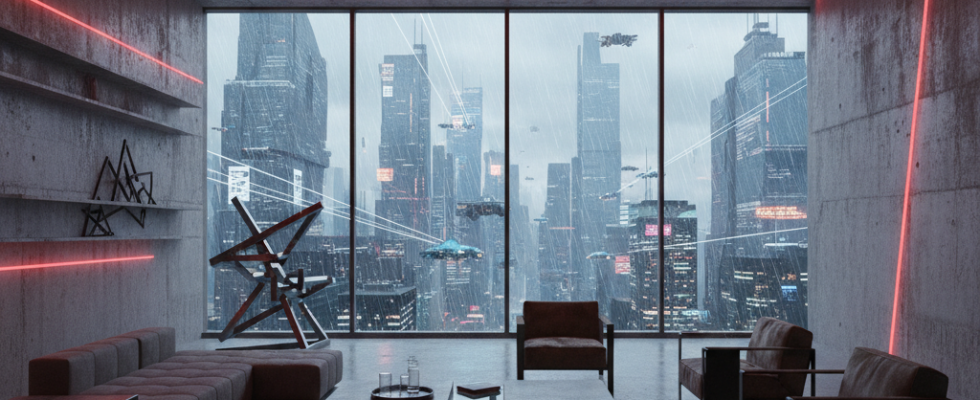
The apartment looks like the lair of someone plotting world domination from a penthouse. Angular furniture in matte black. A single red neon strip casting dramatic shadows across concrete walls. Floor-to-ceiling windows overlooking the city like it is something to be conquered rather than inhabited. The aesthetic is deliberately intimidating, theatrically powerful, and far more livable than it appears in photographs.
Advertisements
Tech villain decor draws from science fiction’s visual language of power. The evil CEO’s office. The rogue AI’s server room. The billionaire antagonist’s modernist compound. These spaces share qualities that translate surprisingly well into residential design: clean lines, dramatic lighting, monochromatic palettes with a single accent color, and materials that feel cold until warmth is deliberately introduced.
The foundation is architectural minimalism pushed slightly past comfortable. Less furniture than a room technically needs. Negative space treated as a design element rather than a problem to fill. Surfaces kept deliberately clear so that the few objects present carry maximum visual weight. Everything that remains in the space earns its presence through either function or dramatic impact.
Lighting does most of the emotional work. A single LED strip in deep red or violet transforms a beige apartment into something cinematic. The key is indirect application. Light the wall, not the room. Create pools of illumination rather than uniform brightness. Let shadows exist as part of the composition rather than treating them as failures of lighting design.
Materials lean toward industrial and raw. Concrete, darkened metal, glass, and leather. If your space has exposed ductwork or structural concrete, embrace rather than conceal it. If not, concrete-effect paint, metallic shelving, and dark-stained wood approximate the industrial vocabulary without renovation.
The livability secret is texture contrast. Hard surfaces everywhere creates an environment that feels like a showroom rather than a home. Introduce a single deeply textured element, a shaggy rug, a velvet chair, heavy linen curtains, and the space immediately becomes inhabitable while maintaining its dramatic character. The softness reads as intentional luxury rather than contradiction.
Sound matters in these spaces more than most. Hard surfaces reflect audio harshly. Acoustic panels disguised as art, thick curtains, and strategic soft furnishings prevent the space from sounding as cold as it looks. The goal is visual drama with acoustic warmth. You want to look powerful, not hear echoes of your own footsteps reminding you that you live alone in a concrete box.
Is this aesthetic slightly ridiculous? Perhaps. But all intentional interior design is a form of theater. You are creating a stage for your daily life. If that stage happens to look like the set of a film about a genius with questionable morals and impeccable taste, at least the reviews will be interesting.