

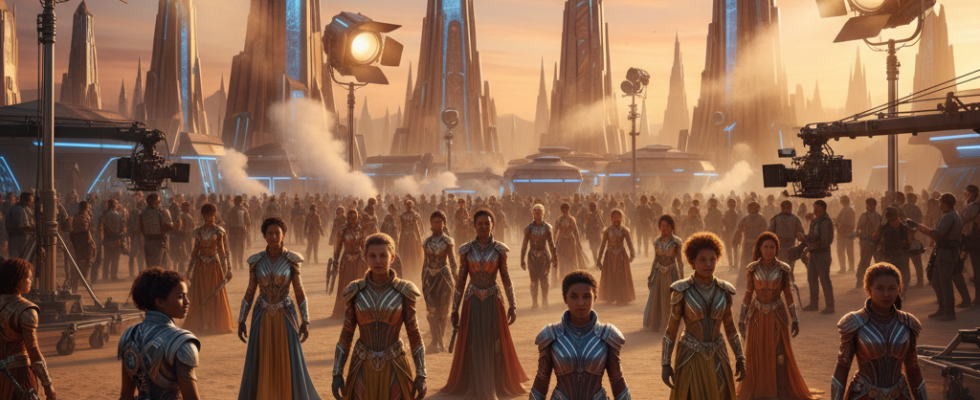
There was a period when diversity in television meant one character from a different background inserted into an otherwise homogeneous cast, given nothing to do except represent their demographic. They existed to prove the show was progressive without the show actually being progressive. That era is ending, and what replaces it is finally interesting enough to discuss on artistic terms rather than political ones.
Advertisements
The series that get this right share a common approach. They write specific people rather than representative categories. A character who happens to be from a particular background has depth, contradictions, flaws, and desires that extend far beyond their identity markers. Their stories are not about being different. Their stories are about being human, told through the lens of their particular experience.
Authenticity in the writers’ room matters more than casting diversity alone. Shows staffed with writers who share lived experience with the characters they are creating produce stories with texture that outsiders cannot fabricate. The details ring true. The humor is specific rather than generic. The conflicts emerge from genuine understanding rather than research reports.
The global expansion of streaming has accelerated this shift dramatically. When a series from Seoul reaches audiences in Sao Paulo and Stockholm simultaneously, the definition of universal storytelling expands. Audiences have proven repeatedly that they do not need characters who look like them to feel connected. They need characters who feel like real people navigating real complexity.
What distinguishes the best diverse storytelling from tokenism is integration. Diverse characters are not there to teach the audience lessons. They are there because the world is diverse and any accurate reflection of it necessarily includes multiple perspectives. The diversity is not the point of the show. It is the context in which the point of the show unfolds.
Younger audiences find the entire conversation slightly outdated. They grew up consuming global content across platforms without the filters that previous generations experienced. A Korean drama is not exotic to them. A show with a predominantly Black cast is not niche. These are simply shows, evaluated on quality rather than identity politics. The categorization itself feels like an artifact of a less connected era.
The best measure of progress is when diversity stops being remarkable. When a cast that reflects the actual world does not generate think pieces about representation because it simply looks like reality. We are approaching that point. Not there yet, but close enough to see it clearly from where we stand.