

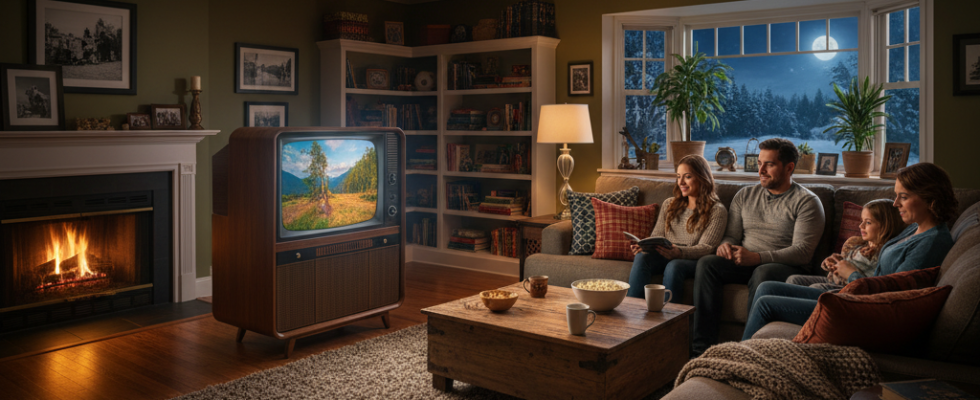
Forty-five minutes. That is how long I spent last Thursday scrolling through streaming catalogs before giving up and watching nothing. The paradox of infinite choice had won again. Every option triggered the suspicion that something better existed one more scroll away. By the time decision fatigue set in, the evening was over and the screen stayed dark.
Advertisements
This experience is so universal that it has spawned a quiet counterrevolution. People are returning to scheduled programming. Not because the content is better but because someone else made the decision for them. The relief of sitting down and watching whatever happens to be on without the burden of choosing is a comfort that streaming’s promise of total control accidentally destroyed.
Decision fatigue is not laziness. It is a well-documented cognitive phenomenon where the quality of decisions deteriorates after a sustained period of decision-making. By evening, most people have made thousands of micro-decisions throughout their day. Asking their depleted brains to evaluate hundreds of entertainment options is not empowering. It is exhausting.
The streaming platforms know this. Their interfaces increasingly include “play something” buttons, curated channels that simulate linear programming, and autoplay features that eliminate the return to the selection screen. They are building linear television inside their on-demand architecture because the data shows that user satisfaction does not correlate with unlimited choice. It correlates with reduced friction between wanting to watch and actually watching.
Live television has additional qualities that on-demand viewing cannot replicate. The shared temporal experience of watching something at the same time as others creates community in a way that individual viewing schedules do not. Social media conversation around live events has a vitality that discussions of shows watched at different times across weeks cannot match.
There is also the serendipity factor. Stumbling upon something you would never have chosen but end up loving is an experience that algorithmic recommendations approximate but do not truly deliver. Algorithms show you more of what you already like. Scheduled programming occasionally confronts you with something outside your established patterns.
The future is not binary. On-demand will not disappear, nor should it. But the assumption that more choice always equals more satisfaction has been conclusively disproven by millions of evenings spent scrolling instead of watching. Sometimes the best thing a screen can do is simply show you something good without asking your permission first.