

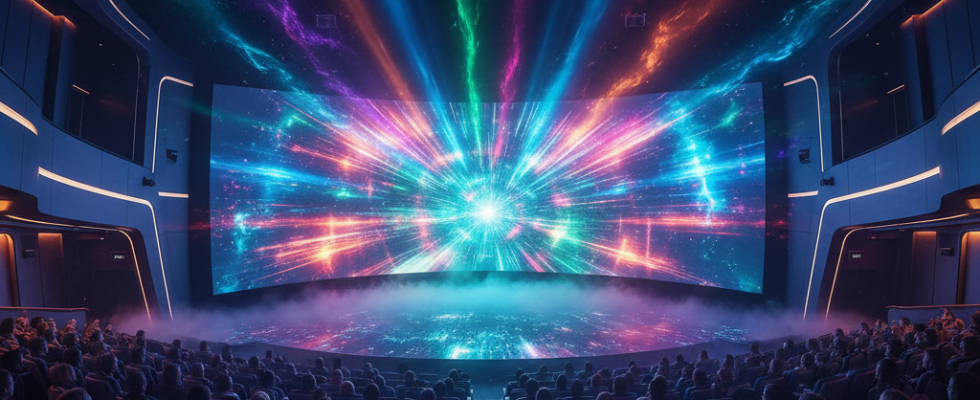
The rain hit my face during a scene set in a storm. Not metaphorical rain. Actual water mist, timed perfectly to the downpour on screen. The seat beneath me tilted as the camera swooped over a cliff edge. A low-frequency rumble traveled through the floor during an explosion with enough subtlety that my body responded before my conscious mind registered what was happening. This is cinema that refuses to stay behind glass.
Advertisements
5D cinema extends the viewing experience beyond sight and sound into physical sensation. Motion seats, environmental effects like wind and mist, scent delivery, haptic feedback, and spatial audio that positions sounds in three-dimensional space around you rather than simply projecting them forward. The goal is not spectacle for its own sake. It is immersion deep enough that the boundary between observer and participant dissolves.
The technology has existed in theme parks for decades, but its integration into narrative filmmaking is newer and more sophisticated. Theme park applications use effects to enhance thrills. Cinematic applications use them to enhance emotion. A gentle breeze during a quiet moment. Warmth during an intimate scene. Subtle vibration during tension. The effects serve storytelling rather than overriding it.
Directors working in this format describe a different relationship with their audience. Traditional cinema assumes a passive viewer. 5D cinema requires the director to consider the audience’s physical state as part of the emotional arc. If the viewer is physically tense because of seat motion, their emotional response to narrative tension amplifies. If they are physically relaxed through ambient warmth and gentle motion, tenderness lands more deeply.
The theaters themselves are architectural achievements. Smaller than traditional cinemas, more like intimate performance spaces, they seat fewer people to ensure every position receives effects with equal precision. The reduced capacity means higher ticket prices, which positions the format as premium entertainment rather than everyday moviegoing.
Not every film benefits from physical enhancement. Dialogue-driven dramas might gain nothing from motion seats. The format works best with stories that have strong physical and environmental dimensions. Adventure, science fiction, nature documentaries, horror, and animated features translate most naturally.
The question is whether physicality deepens storytelling or distracts from it. Having experienced both outcomes, the answer is: it depends entirely on restraint. When effects are invisible in their integration, they amplify emotion without calling attention to the technology. When they are excessive, they reduce cinema to a ride. The best practitioners understand that less is almost always more, and that the body’s response should serve the story’s heart.