

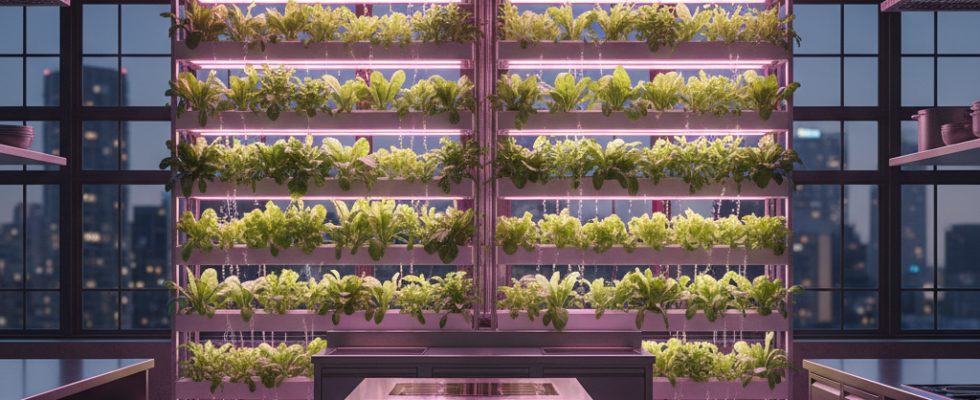
January. Grey sky, cold apartment, and I just harvested fresh basil, arugula, and three varieties of lettuce from my kitchen wall. No balcony, no sunlight, no soil. Just water, nutrients, LED panels, and the quiet satisfaction of growing food in a space that barely fits a dining table.
Advertisements
Indoor gardening has been transformed by affordable LED grow lights and hydroponic systems that require less maintenance than a houseplant. The technology that once filled commercial greenhouses has been miniaturized, simplified, and priced for apartment dwellers who want fresh greens without a garden or even a windowsill.
Hydroponics sounds technical until you understand the basics. Plants grow in water enriched with mineral nutrients instead of soil. Their roots are exposed to a nutrient solution either continuously or on a timer. Without the inefficiency of extracting minerals from soil, plants grow thirty to fifty percent faster and use ninety percent less water than traditional gardening. Your apartment becomes a more efficient farm than an actual farm.
The simplest entry point is a countertop herb garden. Self-contained units with built-in lights and water reservoirs that grow basil, mint, cilantro, and lettuce with essentially zero effort. Fill the reservoir, drop in a pod, and wait. Within three weeks, you have fresh herbs that taste nothing like the wilted bundles from the grocery store because they are alive until the moment you eat them.
Vertical wall systems scale the concept dramatically. A one-meter-wide wall panel can produce enough salad greens for a household of two with continuous harvest cycles. The LED panels run on less electricity than a desk lamp and can be set to timers that optimize light exposure for whatever you are growing.
The flavor difference is the argument that converts skeptics. Lettuce from your wall, harvested thirty seconds before eating, has a vitality and crispness that store-bought greens lost three days ago in a refrigerated truck. Herbs grown in your kitchen have essential oil concentrations that dried herbs cannot approach. Once you taste the difference, buying plastic-wrapped greens feels like a compromise you no longer need to make.
There is also something psychologically grounding about growing food. In apartments that can feel disconnected from natural cycles, watching seeds germinate and leaves unfurl provides a rhythm that screens cannot. It is small-scale agriculture for people who live in the sky. And it tastes like the future should always have tasted.