

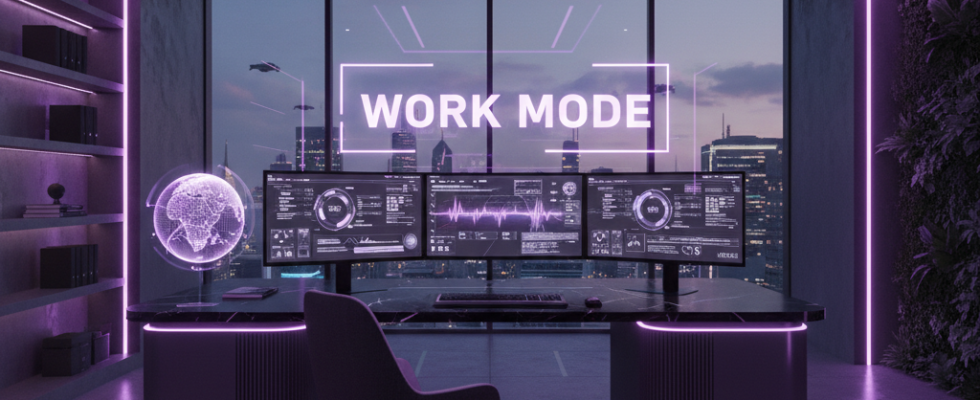
Your back knows before your brain does that your home office setup is wrong. That dull ache at 3 p.m. The shoulder tension that only appears on work-from-home days. The neck position you hold for eight hours that your body tolerates until, one day, it absolutely does not. Most home offices were assembled in panic during 2020 and have not been meaningfully upgraded since. Your body has been silently protesting for years.
Advertisements
The current generation of home office ergonomics goes far beyond “buy a good chair.” The approach is systemic. It considers the relationship between monitor height, desk depth, keyboard position, lighting angle, and movement frequency as interconnected variables rather than isolated purchases.
Start with the monitor. Your eyes should meet the top third of the screen without tilting your head. If you are looking down at a laptop all day, you are loading your neck with roughly five kilograms of additional force for every inch your head tilts forward. Over eight hours, that is not just uncomfortable. It is structural damage in slow motion. A laptop stand or external monitor at the correct height is not optional.
The desk height debate is settled. You need both sitting and standing options, but more importantly, you need easy transitions between them. Electric sit-stand desks with memory presets remove the friction that prevents people from actually changing positions throughout the day. The best predictor of ergonomic health is not any single position. It is how often you change positions.
Your keyboard and mouse placement matters more than their brand. Elbows at ninety degrees, wrists neutral, shoulders relaxed. If reaching for your mouse requires extending your arm, you are generating repetitive strain with every click. Split keyboards and vertical mice look strange initially but eliminate the wrist angles that cause carpal tunnel over time.
Lighting is the overlooked element. Screen glare causes squinting. Insufficient ambient light creates contrast that strains your eyes. The ideal setup layers task lighting, ambient lighting, and screen brightness calibration so that your eyes never work harder than necessary to resolve what they are looking at.
Movement integration is the final piece. A balance board under a standing desk. A walking pad for calls that do not require typing. A timer that reminds you to stand every forty-five minutes. The human body was not designed for stillness, and no chair, regardless of price, makes eight hours of immobility healthy. The best ergonomic investment is the one that keeps you moving.